We have compiled a list of manufacturers, distributors, product information, reference prices, and rankings for Metal Paint Pretreatment.
ipros is IPROS GMS IPROS One of the largest technical database sites in Japan that collects information on.

Metal Paint Pretreatment - List of Manufacturers, Suppliers, Companies and Products | IPROS GMS

Metal Paint Pretreatment Product List

1~8 item / All 8 items

Displayed results

Insufficient degreasing is the root cause of all painting defects and reduced adhesion.

The reason for the persistent paint peeling and pinholes may be the invisible residue of oil.

Degreasing is an important process in the pre-painting stage that greatly affects the adhesion of the paint film. If the removal of oil, dust, and oxide films is insufficient, the adhesion of the paint film will decrease, leading to many defects such as paint peeling, pinholes, and variations in film thickness.

  • others
  • Metal Paint Pretreatment

Added to bookmarks

Bookmarks list

Bookmark has been removed

Bookmarks list

You can't add any more bookmarks

By registering as a member, you can increase the number of bookmarks you can save and organize them with labels.

Free membership registration

Insufficient cleaning is the cause of all painting defects and the truth behind recontamination.

The peeling paint and pinholes are not decreasing. The cause may not be due to degreasing, but rather residual chemicals from insufficient cleaning or recontamination.

The cleaning process is a crucial step that removes residual chemicals and fine dirt left after degreasing. However, in practice, there are many cases where it is judged that "there is no problem because we are rinsing with water." In reality, insufficient cleaning can lead to the residual chemical components remaining on the material's surface, which can vaporize during curing, resulting in pinholes or paint film lifting. This is particularly likely to occur with complex-shaped parts, where defects due to liquid pooling can easily arise. This is actually a point that is often overlooked. There are cases where the cleaning water itself is contaminated. Furthermore, in some cases, the final rinse water is managed based on a conductivity standard of 50 microsiemens per centimeter or less. Deterioration of water quality can lead to adhesion failures or whitening phenomena. A common misunderstanding in the field is the belief that "as long as degreasing is done, there is no problem." By reviewing the cleaning conditions, there are many cases where the defect rate can be improved. Actual improvement cases are also detailed in publicly available materials.

  • others
  • Metal Paint Pretreatment

Added to bookmarks

Bookmarks list

Bookmark has been removed

Bookmarks list

You can't add any more bookmarks

By registering as a member, you can increase the number of bookmarks you can save and organize them with labels.

Free membership registration

Insufficient drying was the culprit behind the pinholes, the essence of the cleaning process.

Are you overlooking the drying process after cleaning? In fact, residual moisture may be causing pinholes and blisters.

The drying process after cleaning is an important management item that affects painting quality. However, on-site, there are often cases where it is judged that "there is no problem because it looks dry." In reality, there may be fine moisture remaining on the surface of the material or inside gaps. If painting is done in this state, moisture can evaporate during curing, leading to pinholes, blisters, or delamination of the paint film. This is actually a point that is often overlooked. Complex-shaped parts tend to retain moisture inside. Furthermore, in drying ovens, temperatures are often managed at around 80 to 120 degrees, but there may be cases where the oven temperature does not match the product temperature. A common misconception on-site is the belief that "it's safe because it has passed through the drying oven." By reviewing the drying conditions, there are many cases where quality can be stabilized. Actual improvement cases are also detailed in publicly available materials.

  • others
  • Metal Paint Pretreatment

Added to bookmarks

Bookmarks list

Bookmark has been removed

Bookmarks list

You can't add any more bookmarks

By registering as a member, you can increase the number of bookmarks you can save and organize them with labels.

Free membership registration

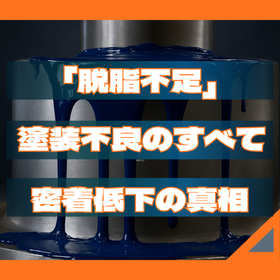
Insufficient rust prevention is the cause of all rust reoccurrence: the truth within the coating.

Has rust reappeared after a while since painting? The cause may not be the paint film, but rather corrosion of the substrate due to insufficient rust prevention treatment.

Rust that reappears after painting may not be due to the paint film itself, but rather insufficient anti-corrosion treatment. However, on-site, it is often mistakenly judged that "since it has been painted, it won't rust." In reality, if fine red rust or corrosion components remain on the surface of the material, corrosion can progress inside the paint film and manifest as reappearing rust months later. This is especially significant at welded joints and cut surfaces, where the effects of insufficient anti-corrosion treatment are more pronounced. This is actually a point that is often overlooked. Even if it looks clean on the outside, corrosion reactions are progressing inside the paint film. Furthermore, if anti-corrosion primer is not applied after blast treatment and left unattended, reappearing rust can rapidly progress in conditions of over 60 percent humidity. A common misconception on-site is the belief that "if the topcoat is thick enough, there will be no problem." By reviewing the anti-corrosion process, there are cases where reappearing rust can be significantly improved. Actual improvement cases are also detailed in publicly available materials.

  • others
  • Metal Paint Pretreatment

Added to bookmarks

Bookmarks list

Bookmark has been removed

Bookmarks list

You can't add any more bookmarks

By registering as a member, you can increase the number of bookmarks you can save and organize them with labels.

Free membership registration

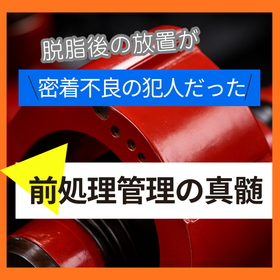
The culprit of poor adhesion after degreasing was leaving it unattended: the essence of pre-treatment management.

Have you not waited after defatting? That "waiting time" may be causing the paint to peel.

Even if the degreasing process is carried out properly, the quality of the paint can vary significantly due to subsequent management. The longer the time after degreasing that the surface of the parts is contaminated again with oil or dust, the lower the adhesion of the paint film will be. Time management from pre-treatment to painting is the key to preventing painting defects.

  • others
  • Metal Paint Pretreatment

Added to bookmarks

Bookmarks list

Bookmark has been removed

Bookmarks list

You can't add any more bookmarks

By registering as a member, you can increase the number of bookmarks you can save and organize them with labels.

Free membership registration

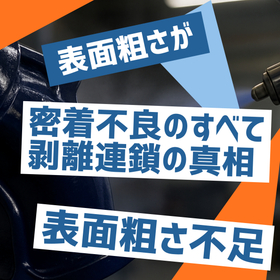
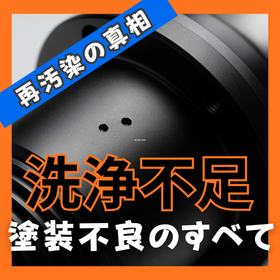
Surface roughness is the cause of all adhesion failures and the truth behind delamination chains.

The peeling of paint and poor adhesion are relentless. The cause may not be the paint itself, but rather a decrease in the adhesion area due to insufficient surface roughness.

Surface roughness is an important pre-treatment condition that affects the adhesion of the paint film. However, in the field, there are many cases where it is judged that "there is no problem because it looks nice." In reality, if the surface is too smooth, the paint may not penetrate sufficiently, leading to poor adhesion or peeling. This is especially significant with stainless steel and aluminum materials, where it may manifest as paint film lifting months later. This is actually a point that is often overlooked. Insufficient roughness can be difficult to assess visually. Furthermore, it is sometimes recommended to aim for a surface roughness of about Ra 1.0 to 2.0 micrometers before painting. Insufficient roughness increases the likelihood of pinholes and paint film peeling. A common misconception in the field is the belief that "a mirror finish is better." By managing surface roughness numerically, there are cases where adhesion can be greatly improved. Actual improvement cases are also detailed in publicly available materials.
  • others
  • Metal Paint Pretreatment

Added to bookmarks

Bookmarks list

Bookmark has been removed

Bookmarks list

You can't add any more bookmarks

By registering as a member, you can increase the number of bookmarks you can save and organize them with labels.

Free membership registration

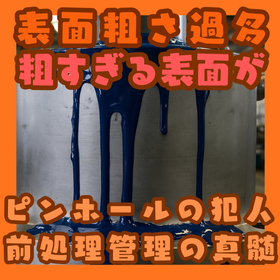
The overly rough surface was the culprit of the pinholes; the essence of pre-treatment management.

Are you noticing an increase in pinholes and film thickness variation after blast treatment? The excessive management of surface roughness may actually be the cause.

Surface roughness is important for improving adhesion, but being rough is not necessarily good. Excessive roughening can, on the contrary, lead to poor painting results. Particularly when the blasting pressure is too high, deep irregularities can form on the surface, preventing the paint from spreading evenly. As a result, air or solvents may remain trapped within the paint film, leading to pinholes or uneven film thickness. This is actually a point that is often overlooked. Excessive roughness affects not only adhesion failure but also appearance defects. Furthermore, it is common to manage blasting pressure at around 0.3 to 0.5 megapascals as a standard. Excessive projection can also lead to material deformation. A common misunderstanding in the field is the belief that "the rougher, the better the adhesion." By optimizing surface roughness, quality can often be stabilized. Actual improvement cases are also detailed in publicly available materials.

  • others
  • Metal Paint Pretreatment

Added to bookmarks

Bookmarks list

Bookmark has been removed

Bookmarks list

You can't add any more bookmarks

By registering as a member, you can increase the number of bookmarks you can save and organize them with labels.

Free membership registration

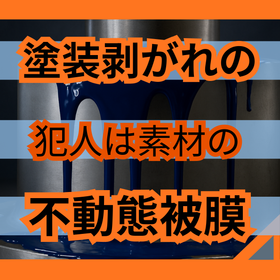
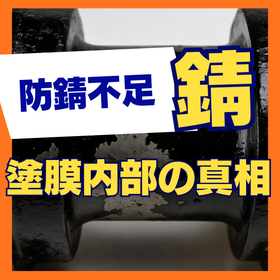
Insufficient surface treatment was the culprit behind the recurrence of rust, a warning of decreased adhesion.

Has rust reappeared after painting? The cause may not be the paint, but rather a decrease in adhesion due to insufficient surface treatment.

Surface treatment is a crucial process that affects the adhesion of the paint film and its corrosion resistance. However, in practice, there are many cases where it is judged that "there is no problem because cleaning is done before painting." In reality, insufficient degreasing or inadequate chemical treatment can lead to reduced adhesion of the paint film, allowing moisture and oxygen to infiltrate through tiny gaps, which can cause corrosion to progress within the paint film. This is particularly true for iron materials and zinc-coated materials, where insufficient surface treatment can easily lead to re-rusting. This is actually a point that is often overlooked. Poor adhesion may not be visible immediately after painting. Furthermore, in chemical treatment, there are cases where management is based on a liquid temperature of 35 to 50 degrees Celsius and a film weight of about 1 to 3 grams per square meter. Insufficient treatment can lead to peeling or pinholes. A common misconception on site is the belief that "rust prevention can be achieved solely through paint performance." By reviewing surface treatment conditions, there are many cases where re-rusting can be improved. Actual improvement cases are also detailed in publicly available materials.
  • others
  • Metal Paint Pretreatment

Added to bookmarks

Bookmarks list

Bookmark has been removed

Bookmarks list

You can't add any more bookmarks

By registering as a member, you can increase the number of bookmarks you can save and organize them with labels.

Free membership registration